
The Erasure of the Creator
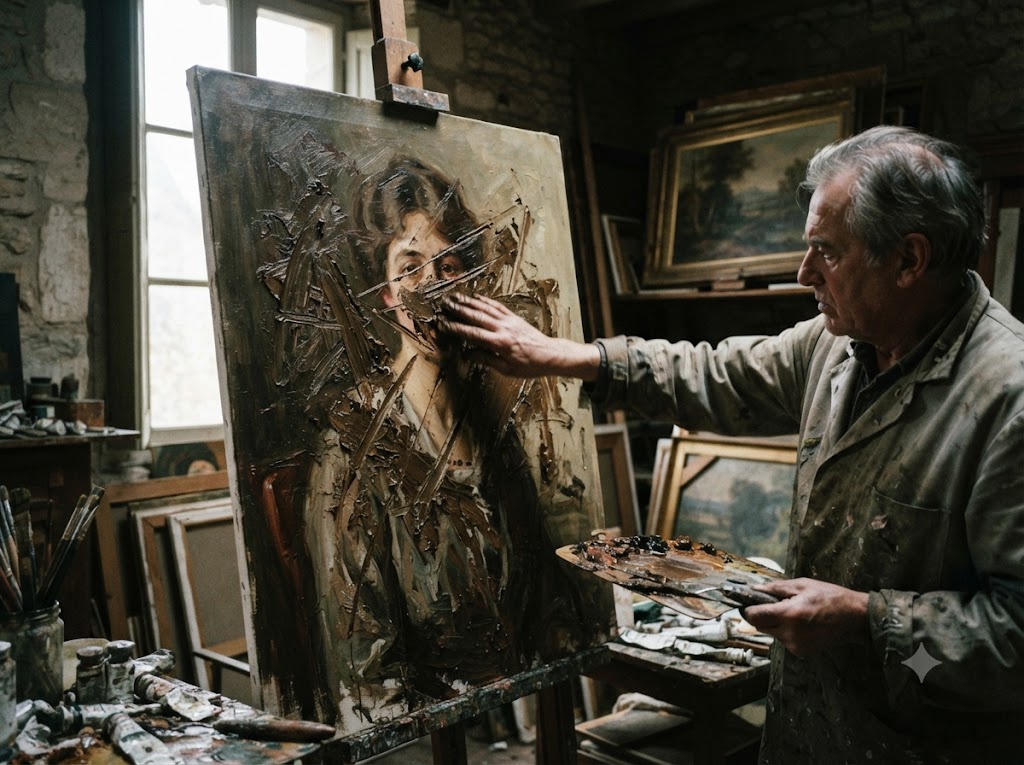
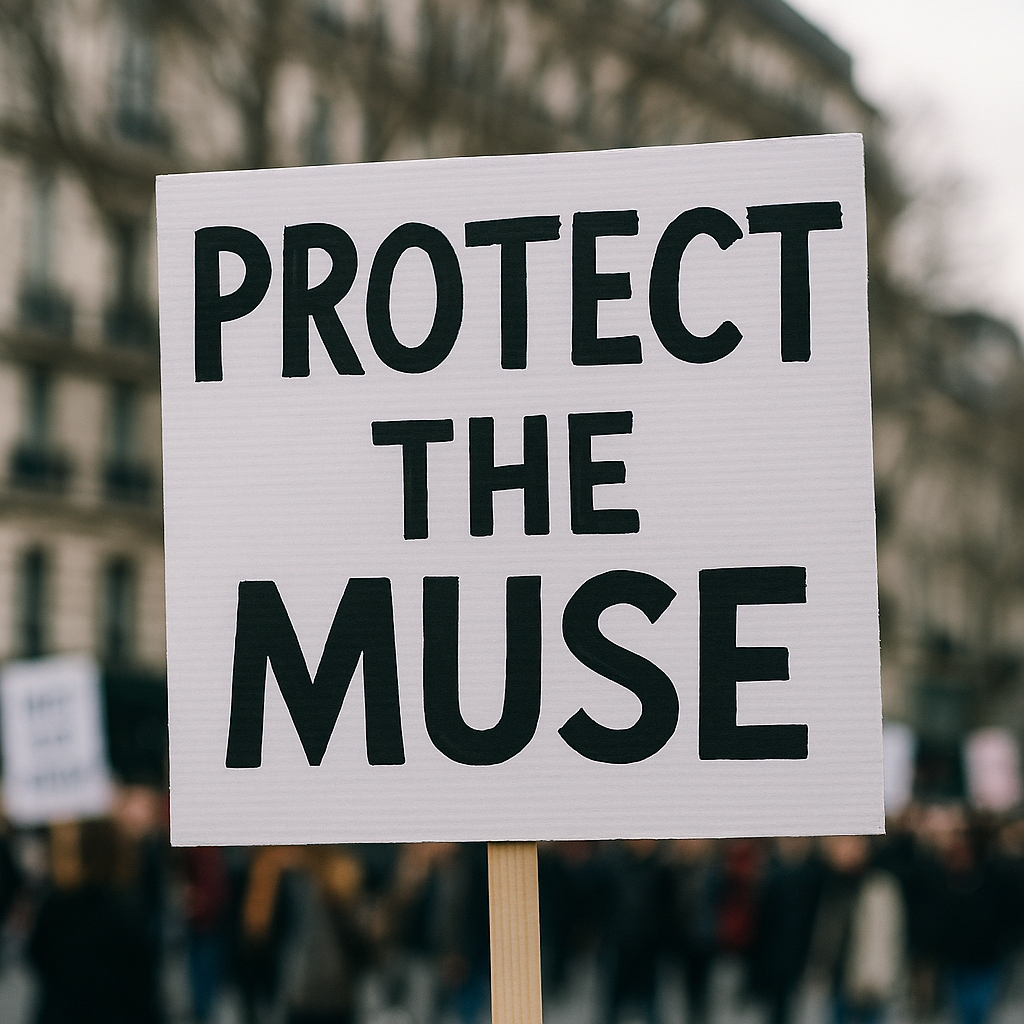
History often casts the censors as external monsters….governments, religious institutions, or offended moralists descending upon a studio to seize a canvas or strike a brushstroke from existence. Yet, some of the most profound acts of destruction in the history of art were not committed by foes, but by the very hands that birthed the work. There is a peculiar, haunting weight to the art that an artist decided simply should not be, a testament to the fact that creators are often their own most ruthless critics.
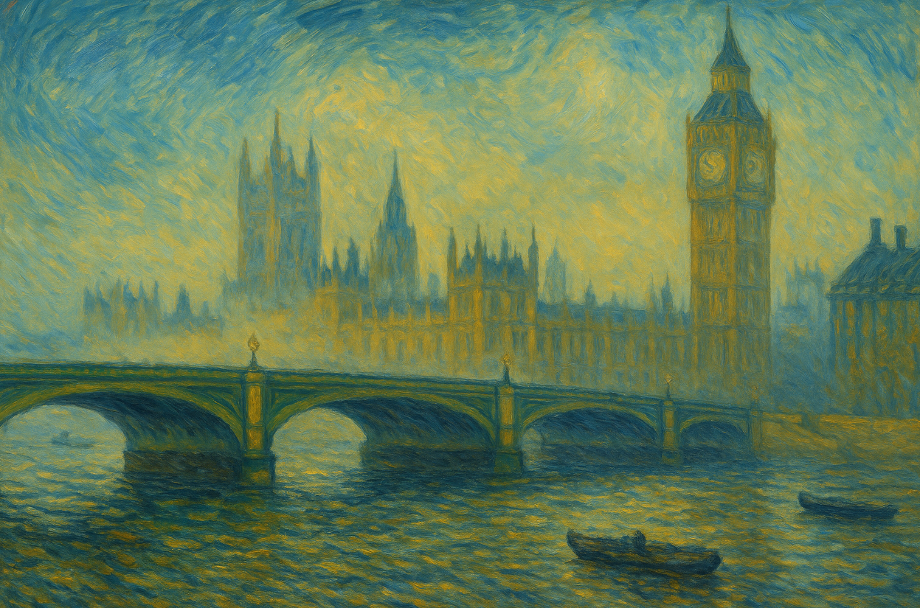
The impulse to destroy one’s own work often stems from a sudden, violent shift in perspective, where a piece that once felt like a breakthrough suddenly reveals itself as a failure or a betrayal of the artist’s current vision. Claude Monet, famously perfectionist in his later years, was known to take a blade to his canvases if he felt they did not meet his exacting standards of light and atmosphere. It is sobering to consider how many Impressionist masterpieces may have been shredded in a moment of frustration, lost to the void because they were not “good enough” for the master’s eyes. These acts were not merely about disposal; they were an attempt to reclaim the integrity of their legacy, ensuring that the world only saw what they deemed worthy of their name.
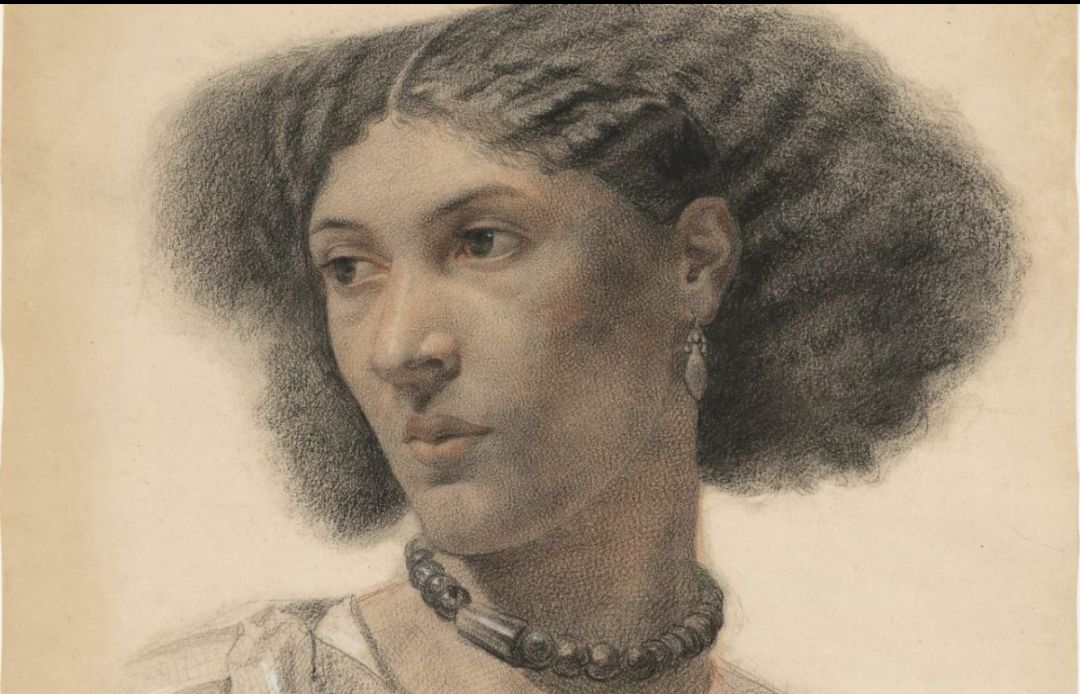
Beyond the artist’s own hand, there exists a secondary, more clandestine layer of censorship: the intervention of the family. After an artist passes, the gatekeepers of their estate often face the delicate task of balancing historical truth against the desire to protect a reputation. We know of “embarrassing” pieces—works that ventured into taboo subjects, political extremes, or simply stylistic experiments that the heirs deemed too damaging to the artist’s brand—that were quietly burned or buried. These are the ghosts of the art world, works whose existence is verified by catalogue entries, letters, or early photographs, yet whose physical forms have been systematically erased to sanitize a narrative.
Perhaps the most frustrating category of lost art comprises those works that we know existed, yet are forever beyond our reach. Historical records frequently mention paintings or sculptures that were highly praised by contemporaries, only to be later destroyed by the artist due to a crisis of faith or a change in circumstances.
To think of a masterpiece existing for years, being held by patrons or discussed in salons, only to be obliterated by a singular, final decision….it forces us to confront the fragility of human creativity.
It leaves us with a painful gap in our understanding of these artists’ developmental arcs. We are left looking at the survivors of their oeuvre, wondering how much more complex the picture might be if the discarded pieces still hung on a wall.
Ultimately, these stories of self-censorship serve as a reminder that the canon of art history is as much defined by what was left behind as by what was intentionally removed. Every time an artist takes a brush to cover their own work, or a family hides a controversial canvas in a dark attic, they are participating in a quiet, private act of editing history. While the loss is undeniable, there is a strange, paradoxical beauty in the idea that art, even in its destruction, remains a deeply personal reflection of the human spirit’s never-ending struggle for perfection.

[…] Read the full post on the member blog → […]
Hi, Abbie!
SO GOOD!! ⭐️⭐️⭐️⭐️⭐️
This essay could be the basis for a book, I think. It’s troubling and wise and very kind in its compassion for those who risk their peace of mind to share what they make with the world. Your personal understanding of what it means to create (and then share the result!) is obvious.
What we create is part of us. It represents us. If it isn’t perfect or exactly what we want or is even slightly disappointing to us, then it can make us feel that way, too. Lesser. Imperfect. Not what we ought to be. I think that’s the risk inherent in creating, whether we’re “great” artists or not. We create versions of ourselves. Sometimes they’re better than we are and they soar! But sometimes the versions are fundamentally flawed simulacra that oughtn’t be seen by anyone.
We create the work. We can destroy it. Generally speaking, the world-at-large has no defensible standing in the decision.
Here’s a thought: If the world has some right to what an artist makes, then what about that artist’s editing decisions? What if Monet first chose emerald green but switched to vermilion mid-stroke? Would the world expect to see two paintings, one with the emerald green and one with the vermilion? Maybe that decision would’ve tipped the scale from a Monet masterpiece to an “OK” Monet. The world can’t know and the world will never see the masterpiece because Monet destroyed it when he switched colors. Similarly, concepts and plans for works that are never even begun might represent what would have been “important.” Unless a creator keeps detailed notes of all ideas or until there’s a reliable way to read minds, the world will never have access to those potentially important pieces. By not sharing edits and ideas, does the artist destroy masterpieces? Maybe. But I don’t want to live in a world where that world owns everything in an artist’s mind.
(I apologize for not visiting lately and for not continuing to share your essay links on my blog. That blog site – along with all my social media accounts – is on hold until I get my FAA shop open. When that’s done I’ll do a launch & then get things back to normal.)
Hi…. I am taking longer than you !! lol I am going crazy trying to finish this damn book and keep up with work and life also hahaha