
Why Literature Still Matters in a World That Can Barely Sit Still

We live in a strange little age, don’t we. An age of endless scrolling, hot takes, vanishing attention spans, and people confidently reviewing books they clearly did not finish. Everything is faster, louder, shorter, shinier. We are fed snippets instead of substance, reactions instead of reflection, and somewhere in the middle of all that noise, literature is still sitting in the corner like a dark old cat, unbothered and faintly judging everyone.
And thank goodness for that.
Literature still matters, not because it is fashionable, and certainly not because it is convenient, but because it does something very few things do any more. It makes us stay. It asks us to remain in one place, with one thought, one voice, one story, for longer than the modern world seems to think is reasonable. In itself, that feels almost rebellious.
Contents
- The Unfashionable Art of Slowing Down
- A Mirror, a Memory, and Occasionally a Warning
- Escapism, Though Not the Fluffy Kind
- Reading as a Quiet Act of Defiance
- Why Stories Stay With Us
- Final Thoughts
The Unfashionable Art of Slowing Down
Literature is gloriously inconvenient. It does not arrive neatly packaged in a ten-second clip. It does not flash and wink and beg for your approval. A novel does not care whether you are in the mood. A poem does not simplify itself because you are tired. Good writing waits, and expects you to meet it halfway.
That is part of its power.
Reading proper literature, whether it is a sprawling classic, a strange modern novel, or a piece of prose that leaves a bruise on the mind, forces a different rhythm upon us. It asks for attention, patience, and a willingness to remain with uncertainty. That is rare now. We are used to consuming things at speed, grazing rather than reading, nibbling rather than digesting. Literature does not lend itself well to grazing. It wants teeth. It wants time.
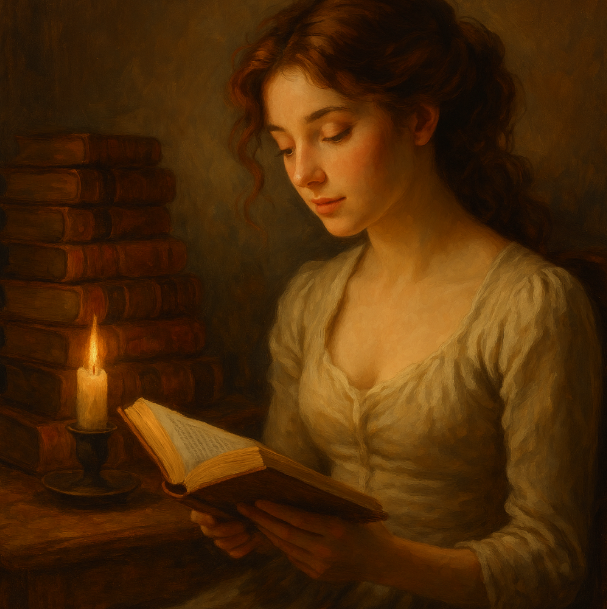
There is something faintly gothic in that, really…. the candlelit persistence of old words in a room full of blue screens.
A Mirror, a Memory, and Occasionally a Warning
One of the reasons literature matters so much is that it preserves us. Not just our events, but our fears, obsessions, values, contradictions, cruelties, tenderness, and blind spots. History will tell you what happened. Literature often tells you what it felt like.
That matters rather a lot.
When we read older works, we are not simply looking at stories from the past. We are overhearing the thoughts of people long gone, finding traces of what stirred them, frightened them, amused them, or kept them awake at night. Literature carries human interior life across centuries in a way very little else can. It is memory with blood in it.
It is also a mirror, though not always a flattering one. The best literature has a nasty habit of revealing things we would often prefer not to see. It shows us our vanity, our hunger, our loneliness, our absurdity, our need to be loved, our talent for self-deception. Now and then it even shows us our politics, which is always awkward.
At other times, it works as a warning. Dystopian fiction in particular tends to age disturbingly well, which is not exactly comforting, but does rather prove the point. People may change their clothes, their devices, and the wording of their slogans, but power, fear, greed, and manipulation remain drearily familiar.
Escapism, Though Not the Fluffy Kind
People often say literature is escapism as though that settles the matter, as though stepping into a book is a retreat from real life. I have never thought that was quite true. Literature is not always an escape from reality. More often, it is a way of circling back to it by another road.
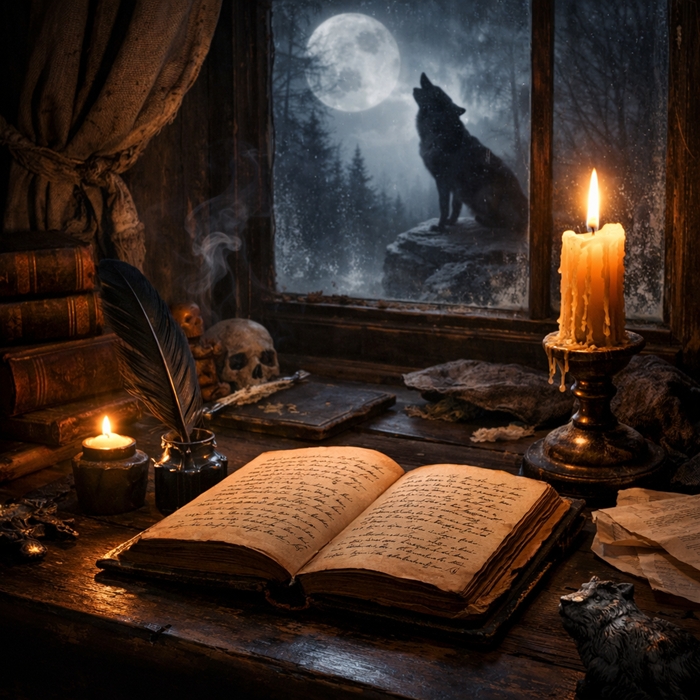
You can read fantasy and come away understanding power more clearly. You can read horror and recognise grief. You can read romance and realise how much of love is really about vulnerability, timing, fear, and luck. You can read tragedy and feel less alone in your own darkness. None of that is trivial. None of that is simply running away.
In fact, literature often demands more emotional honesty than ordinary life does. A book can corner you. A line can ambush you. A character can wander into your head, sit down, and refuse to leave. That is hardly passive entertainment. That is psychological trespassing with punctuation.
Reading as a Quiet Act of Defiance
To read seriously now feels almost subversive. Not in the dramatic cloak-and-thunder sense, sadly, though that would be more fun, but in a quieter and more significant way. Reading requires sustained attention, and sustained attention has become one of the rarest resources we have.
Everything around us is designed to fracture thought. Notifications, updates, alerts, clips, endless content, all of it pulling at the sleeve like an overexcited child. Literature asks you to ignore all that for a while and give yourself over to a deeper current. It demands that you imagine, infer, question, feel, and think, all without being spoon-fed every conclusion.
That process strengthens something in us. It sharpens language. It stretches empathy. It improves concentration. It teaches nuance, which is sorely needed in a world increasingly fuelled by overconfident simplification. Reading reminds us that human beings are rarely only one thing, and that motives are usually messier than slogans.
Also, and this should not be overlooked, it improves one’s ability to spot dreadful writing, which is a public service in itself.
Why Stories Stay With Us
Some stories vanish the moment they are finished. Others cling. They move into the walls a bit. They settle in the marrow. You may forget whole sections of plot, but a feeling remains, or an image, or a line that turns up years later at precisely the wrong moment and ruins your afternoon.
That staying power is part of what makes literature different from disposable content. Literature is not only meant to be consumed. It is meant to be lived with. Returned to. Argued with. Underlined. Misunderstood. Re-read years later with a completely different heart.
A good book changes because we change. Read something at fifteen, and it may feel romantic. Read it again at forty, and suddenly it is about loss, compromise, mortality, or the small humiliations of being human. The text remains the same, but the reader has altered, and so the whole exchange becomes richer.
That relationship between book and reader is part of the magic. Not glittery magic, obviously. Older magic. Stranger magic. The kind with draughts under the door.
Final Thoughts
Literature still matters because we still matter, and because human beings are not built to thrive on fragments alone. We need depth. We need complexity. We need language that does more than sell, flatter, distract, or shout. We need stories that allow us to think slowly, feel honestly, and recognise ourselves, even when what we find is not entirely comforting.
In a world obsessed with immediacy, literature offers duration. In a culture full of noise, it offers voice. In an age where everything seems determined to vanish as quickly as possible, literature remains. Slightly dusty, perhaps. Occasionally difficult. Often inconvenient. Entirely necessary.
It does not beg for attention. It simply waits.
And those of us who still love it, who still return to it, who still believe in the power of a sentence to wound, haunt, seduce, or illuminate, know that this is not some quaint attachment to the past. It is survival of a different kind. A defence of thought. A refusal to let the inner life be flattened into captions and speed.
So yes, literature still matters.
Even now.
Especially now.

Enjoyed this piece?
Explore more of my artwork and writing, or visit my print store to see available wall art.
Read 48 times so far.

[…] Read the full post on the member blog → […]
Yes, yes, yes. Powerful argument…brought me close to tears. 👏👏❤️👏👏 (Shared on https://facesbyrobinking.wordpress.com/2026/04/21/have-you-read-this-yet/)
I am glad it resonated with you. Thank you so much for sharing x
Couldn’t agree more. Some of the greatest moments of my life were when a work of literature made me realize I was not alone. It was comforting. The other thing I really loved learning was that written words had rhythm, and could be poetic. Great blog post.
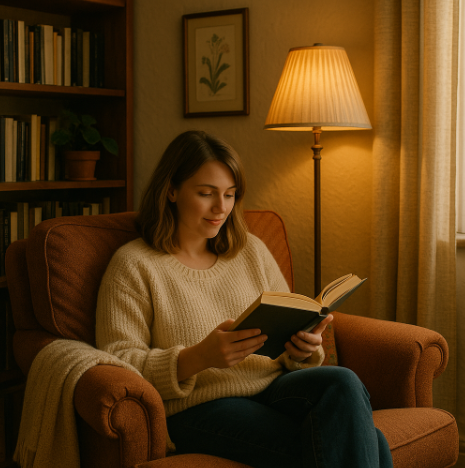
A good author can keep me curled up in an armchair for hours. A bad one will send me out for an angry walk