The Quiet Fallacy of the Zero-Budget Shop

There is an uncomfortable geometry to creative commerce…. Making the work is only half the architecture. Putting it in front of human eyes is the load-bearing remainder.
Yet independent creators and small studio owners will invest deeply in brushes, cameras, domain registrations, software subscriptions, and hardware upgrades, while treating the marketing line with the strict austerity of £0. Then arrives the inevitable question: why am I not selling? The answer is rarely a reflection of artistic merit. Far more often, it is simply that nobody who might buy the piece has any reason to know it exists.
Platforms House the Crowd, Not the Spotlight
We place work on massive platforms like Fine Art America, Pixels, or Etsy, nurturing a quiet hope that the platform’s sheer gravity will pull buyers toward our specific corner.
There is a fundamental misunderstanding here. A marketplace brings buyers to the building, not a dedicated concierge to your individual easel. Consider the scale of corporate reality: Amazon, which suffers from zero deficit in global brand awareness, still pours tens of billions into sales and marketing. Etsy allocates nearly a third of its total revenue to buyer acquisition and retargeting. If industrial giants cannot afford silence, an independent shopfront certainly cannot.
The Two Currencies: Pound Notes and Hours
Free marketing is real, and it should be deployed. SEO, targeted social media, engaging posts, curated mailing lists, and community networking genuinely generate traction without paying per click.
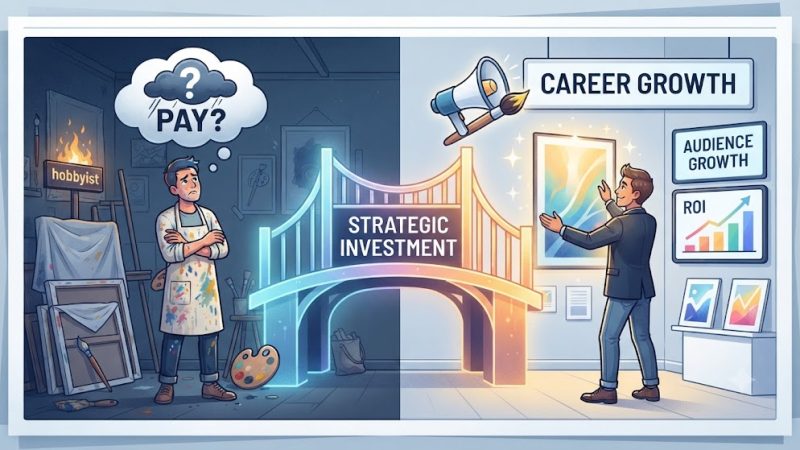
None of these mechanisms are effortless. Writing useful content takes hours. Photographing products, building mockups, studying analytics, and posting consistently require deliberate labour. Time is not free equity. Consequently, the independent creator has two currencies available: money and effort. Wanting to spend neither—no advertising budget, no regular outreach, no experimentation, and no analysis—is not a marketing strategy…. It is a lottery ticket.
Treating a Sale Like an Ecosystem
When £100 enters the business, psychological temptation whispers that you have made £100. A commercial mindset divides the spoil differently.
A healthy sale feeds multiple directions: raw materials, tax obligations, software overhead, equipment replacement, retained safety reserves, and customer acquisition. Reinvesting roughly 5% to 15% of revenue—or committing a modest £10 to £20 monthly test fund—creates a sustainable pulse. Measure what happens when you spend £20 on a targeted test. Did people click? Did they linger? Did anyone subscribe or buy? Double down on what performs; ruthlessly prune what flatlines.
Building a Business, Not a Waiting Room
Nobody can guarantee a sale, regardless of whether you run paid campaigns or rent a gallery stand. Visibility multiplies opportunity, whereas silence multiplies obscurity.
An artist does not need to become a corporate executive, nor should marketing consume the creative spark that made the venture worth starting. Yet creation gives you an object. Marketing gives that object a public. You generally need both before you inhabit a genuine business rather than a quiet digital waiting room.