Interview with Chris Simms – British Author
Another interview I had to bring from the now closed site, 1stangel.co.uk which was hacked 🙁
I met Chris when he gave a reading in our local library. His books are about my local area and are really easy to read and fabulous!
Interview with Chris Simms – British Author
He knew about his great-grandfather, Padraig. The giant navvy who, back in the late eighteen hundreds, had gathered enough money through bare-knuckle fighting to get his family out of the Manchester slum known as Little Ireland.
– Sleeping Dogs
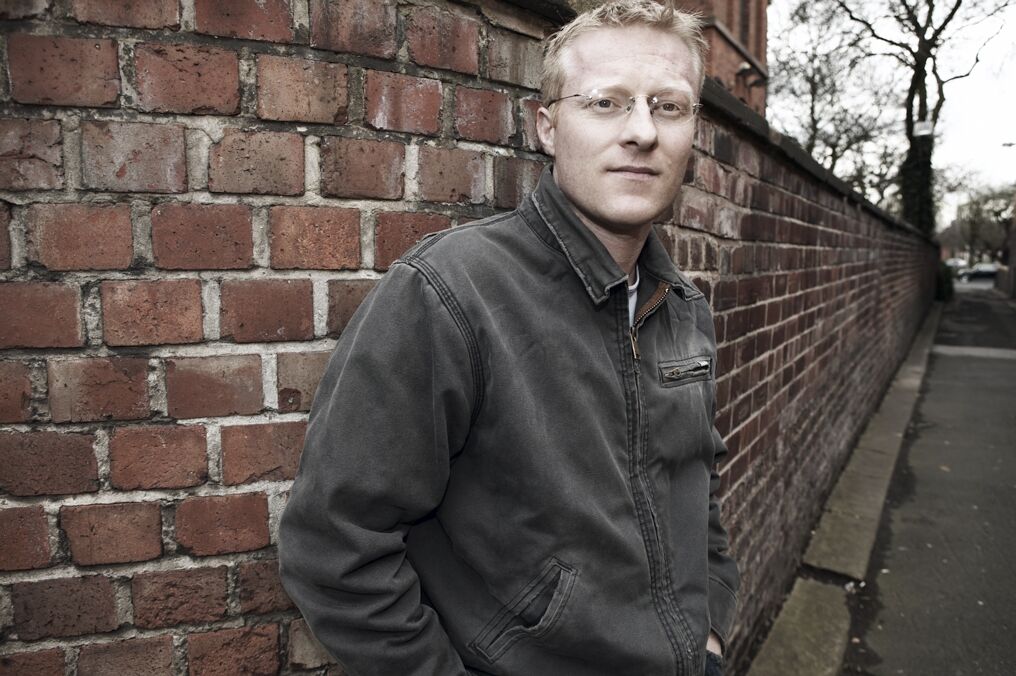
Chris Simms has worked in airports, nightclubs, post offices and telesales centres. After travelling throughout the world, he settled near Manchester where he lives with his wife and four children.
Along with nominations for the Theakston’s Crime Novel of the Year award and Crime Writer’s Association Dagger awards (for his novels and short stories), Chris was selected by Waterstone’s as one of their ‘25 Authors For The Future’.
When did you first become interested in writing?
I’ve always enjoyed writing but, until my late twenties, had only managed short stories – solely intended for the enjoyment of friends and family. However, at the back of my mind a nagging voice periodically cut through. It pointed out that I still hadn’t written the novel I’d always meant to.
EXTRA. I fear I’m giving myself repetitive strain injury because I spend too much time typing.
What style of writing do you use most?
My background is as an advertising copywriter. And since no-one buys a newspaper or magazine to read the adverts, you’re taught to use words economically and to make every line count. So I guess my favoured style is ‘terse’!
Has your style changed from when you first began as an author?
Not really. I re-read my lines more, always looking to rearrange or shorten to get what I really want to say jumping out. I’ve tried to learn how to punctuate properly. In that sense, perhaps I’m slightly more polished.
The huge dog immediately released its grip and, with spade-like head hung low, swung its gaze in Jon’s direction. The movement reminded him of a big cat: a lion or leopard getting ready to defend its prey.
– Sleeping Dogs
In what way do you usually put down your ideas first?
Longhand, pencil, A4 lined pad. I only use the left-hand side. This leaves the right-hand side free for later amends / additions / notes to myself.
What made you choose that medium?
Writing straight-to-screen doesn’t work for me. It creates a strong urge to get it right first time. I like the freedom of adding new bits in, scribbling little arrows to move things around, grabbing a rubber and physically removing stuff…
Do your ideas come from life or imagination?
Both. I have read newspaper articles that have sparked an idea. But I have also been day-dreaming out of a train window and seen something that did the same thing. Often the idea is incredibly vague – but I always know if it will, eventually, turn into a viable plot.
How do you choose your characters?
Characters don’t come that easily to me. I think that’s because a lot of my stories are driven by plot, not people. I’ll try and draw a character, complete with descriptive labels like ‘long, straight nose, nostrils that flare when impatient’ to bring them to life in my mind.
Jon’s eyes locked on the van’s rear. The rag covering the registration plate had been removed and he glimpsed a series of numbers with a single letter in the middle. The vehicle was from Ireland. As he sprawled into the grass, he closed his eyes. Was the attack on Punch revenge? he wondered. Revenge for what I did in Clifden?
– Sleeping Dogs
Who is your favourite author?
I’m tempted to say Cormac McCarthy, but people will probably think I’m jumping on a bandwagon. (I’m not. I read All the Pretty Horses years ago when it was a freebie included with a magazine my wife bought.) So I’ll say Graham Greene instead.
What is your favourite piece of work by yourself?
Aah – you can’t ask that! Would you ask someone to name their favourite child??? (I have included snippets from Sleeping Dogs)
Sunlight suddenly broke through, bathing the landscape in an ethereal glow. The finger of water bordering the right-hand side of the road turned to a shimmering stretch of lava and he had to squint against its glare. Then the hills were behind him and the terrain abruptly grew flat.
– Sleeping Dogs
How much time (on average) does it take to complete a work?
I think about nine months. My editors would probably say ‘add another six for turning it into a proper book.’
How well do you take criticism?
When editorial comments come in, I’ve learned to walk away from the computer. No reply I come up with in the first twenty-four hours is safe to send. I’ve also learned that 90% of suggestions are, actually, perfectly sensible.
EXTRA: Accept the fact, if you write novels, your friends will suspect you of trying to mine their lives for juicy ideas.
What do you do to overcome a ‘block’?
Touching wood here, I’ve never experienced it.
How do you know something is ‘finished’? Is it easy to walk away?
As he looked at the mass of dark buildings ah
ead, his foot lifted from the accelerator and his speed began to drop. I’m here because of a phone call from someone I don’t know. And all I have is her word that it’ll be simple to get Zoe out of this place.
– Sleeping Dogs
That’s tricky. Did someone say a poem is only finished when the poet runs out of time? It’s tempting to endlessly tinker with a novel, but easy to get yourself lost doing it. A deadline, in that sense, is great.
Have you any publications planned for the future?
A novel-length ghost story to come out before Christmas. Readers often say that, for crime novels, my books can be very scary. So I thought I’d go into that area a bit more heavily.
What are your plans for the future?
To find a way of balancing writing with earning money! Economically speaking, creating novels is a ridiculous use of your time.
What advice would you give new authors?
Treat it is a pass time that, if you’re lucky, generates a bit of cash. And don’t ever give up the day job…
Have you done any courses to help you?
No: I just waded in like an idiot.
EXTRA: Completing a book is only the end of one stage; getting it published is a different thing entirely. Remember, publishing is an industry the ultimate aim of which is to generate profits for the publisher.
What do you do to market your work?
Not enough beyond the usual web site / Facebook activity. I also edit Case Files, the online magazine for The Crime Reader’s Association. That gets my name out there a bit.
Do you use social networking in your day to day life?
To be honest, social networking fills me with unease. I think it’s taking a negative toll on too many peoples’ lives. Having said that, I’ve grown quite fond of my Facebook page – probably because I only do one update per week.
(www.facebook.com/AuthorChrisSimms)
Are you interested in collaborating with artists?
Funnily enough, I’ve just done exactly that with a photographer based in Wales. The story is out in spring, details will be on my Facebook page nearer the time…
Have you got hobbies?
I have four kids: their hobbies are my hobbies. I’m good at drawing ogres, dragons and princesses. And my train track creations are incredible.
Where are you based?
Twenty minutes outside Manchester, UK.
Sleeping Dogs, launched on a Kindle Countdown deal on the 28th October 2014